



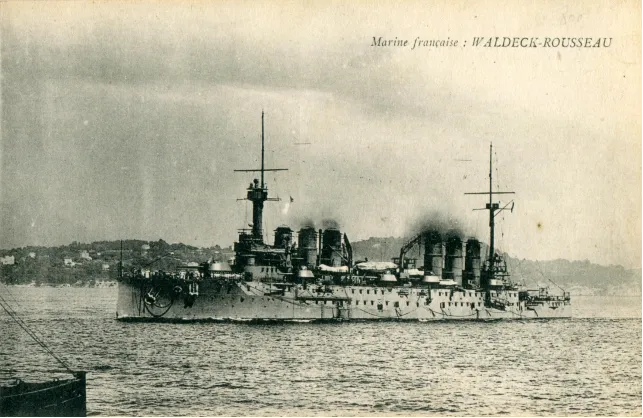
In the autumn of 1922, a steamship pulled slowly away from a St. Petersburg pier. On its deck stood people who, only recently, had been university professors, priests, philosophers, writers, and scholars. Many refused, until the very last moment, to believe that they were leaving Russia forever. They took no possessions with them — almost nothing was left. They carried away books, manuscripts, family photographs, icons, memories, and the hope of one day returning.
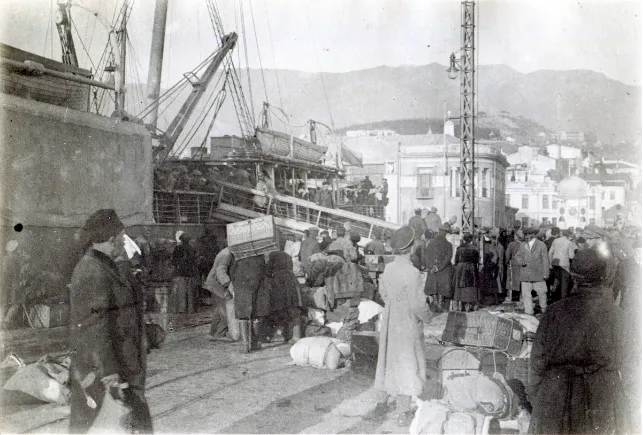
This voyage entered history as the “philosophers’ ship.” In truth, however, it was far from the only one. After the Revolution, dozens of ships and trains left Russia; hundreds of thousands of people departed through Crimea, Constantinople, the Baltic lands, and the Balkans. Thus began the first wave of Russian emigration — one of the most tragic and, at the same time, one of the most fruitful chapters in the European history of the twentieth century.
This is a history that would so transform and enrich the cultural landscape that, a century later, it gives grounds to speak of a Russian heritage in Europe — and more than that, of the impossibility of imagining the culture of the continent without this heritage.
More than a million people found themselves beyond the borders of their country. Among them was a significant part of the intellectual and spiritual elite of the former Russian Empire. They had lost their state, but they kept their faith and their capacity to create and to build.
“We carried Russia away with us,” wrote Ivan Shmelyov.
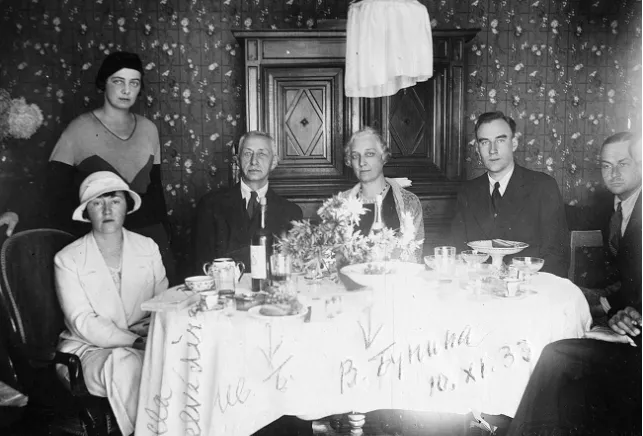
Living in France, Ivan Bunin never tired of repeating: “Russia! Who dares to teach me to love her?” In 1933 he became the first Russian laureate of the Nobel Prize in Literature. For many of his contemporaries, this was recognition not only of his own talent, but of the whole of the Russian diaspora, which had managed to preserve a high culture far from the homeland.
Georgy Fedotov, a historian of the Russian emigration, once observed that Russia had continued to exist beyond its political borders. And indeed, the exiles created a whole world in Europe — universities, publishing houses, learned societies, literary journals, charitable organizations, parishes, and monasteries.
“France received us with a generosity we must never forget. Yet we remain sons of Russia,” said Anton Kartashyov.
These words convey with remarkable precision the worldview of the first emigration. Love for Russia never stood in contradiction to a deep gratitude toward the European countries that had opened their doors to them in the hardest of years.
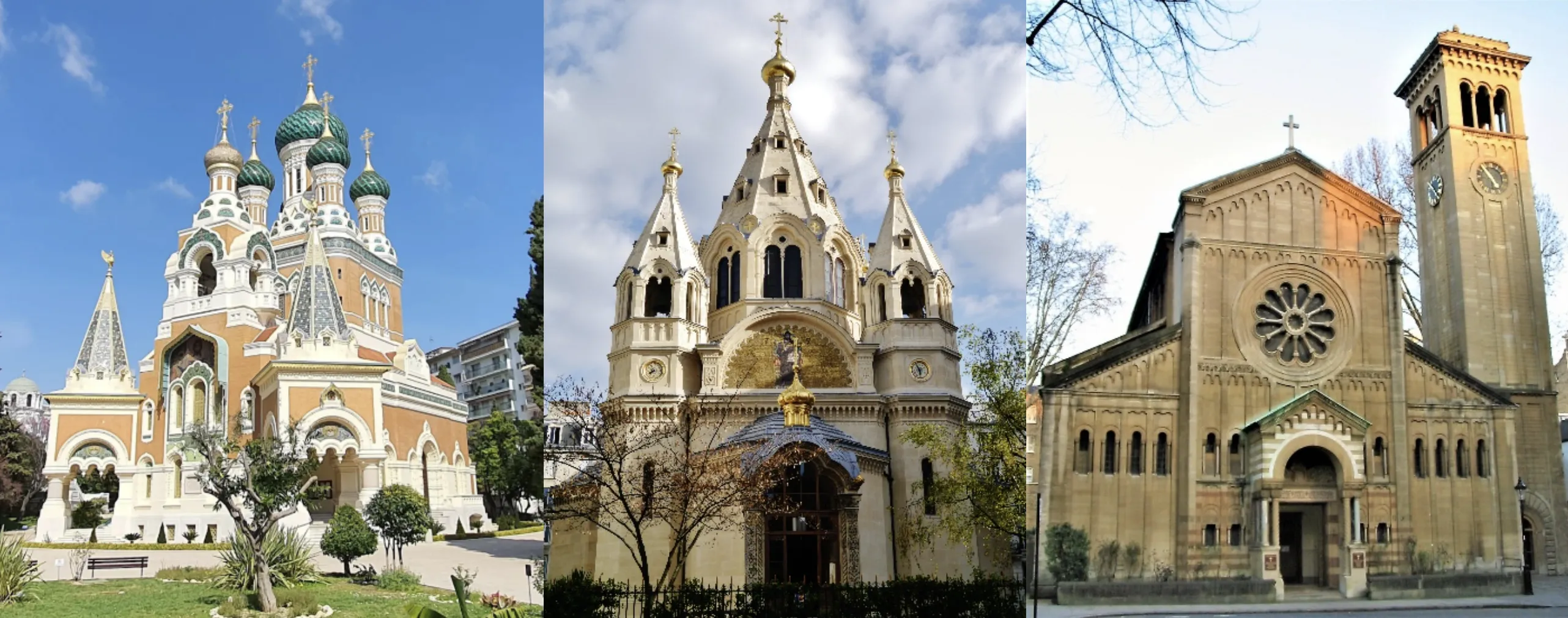
It was then that the Orthodox centers appeared without which the religious map of Europe would be unimaginable today. The Alexander Nevsky Cathedral on the Rue Daru in Paris, the Russian parishes in Nice, Brussels, and Munich, and the Dormition Cathedral in London became not only places of Orthodox prayer but also centers for the development and the symbiosis of European and Russian culture.
In Serbia, in 1921, the organizational establishment of the Russian Orthodox Church Abroad was completed.
Russian professors made up a considerable share of the faculty of the University of Belgrade, while hundreds of Russian priests joined the clergy of the Serbian and Bulgarian Orthodox Churches.
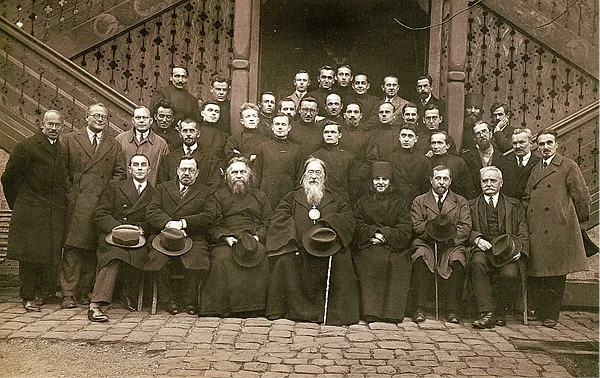
The true intellectual capital of Orthodoxy became the St. Sergius Orthodox Theological Institute in Paris, founded in 1925. Here taught such universally acknowledged luminaries of theology as Archpriest Sergius Bulgakov, Georges Florovsky, Vasily Zenkovsky, Anton Kartashyov, Nikolai Afanasyev, and many other thinkers who shaped the development of Orthodox theology for decades to come.
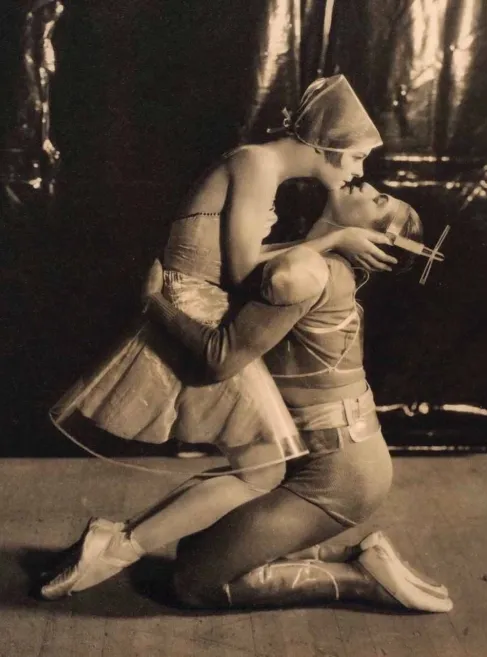
During these same years, Russian culture, having recovered from the turmoil of the revolution, flourished on the fertile soil of Europe. Sergei Diaghilev turned his “Ballets Russes” into one of the foremost cultural phenomena of Europe. Russian ballet transformed ideas about modern theater, stage design, and music. Artists of the Russian diaspora became part of the Parisian art world, architects built European cities, and composers and musicians performed on the finest stages of the continent.
This new cultural era would more rightly, and more gratefully, be called a “European-Russian flowering,” for it took shape not only on the fertile soil of Europe, but its very metaphysical essence grew out of the White emigration’s inspiration by European grandeur and values.
Returning to theology, it is worth recalling that during the Second World War the ideas of the Paris School found new development, this time in North America. The priests Alexander Schmemann and John Meyendorff made St. Vladimir’s Theological Seminary in New York one of the leading centers of Orthodox thought. Their works on liturgics, Church history, and Byzantine theology were translated into dozens of languages.
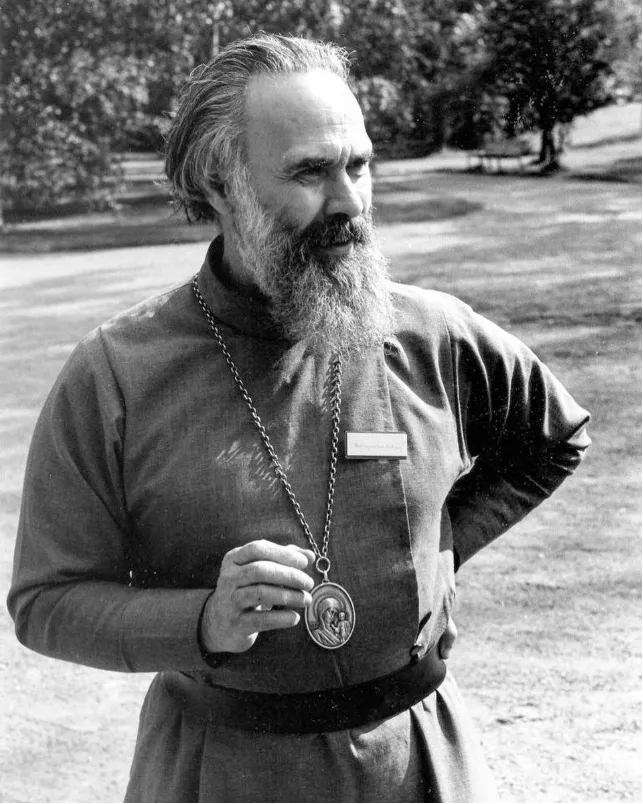
And in London, Metropolitan Anthony of Sourozh managed to make Orthodoxy comprehensible to thousands of English men and women, presenting it not as the religion of émigrés but as a living Christian tradition.
“I regarded our role in the West as missionary… We are here as the voice of the Orthodox Church of the Russian tradition,” said Metropolitan Anthony.
By the end of the twentieth century, Orthodoxy in Europe had ceased to be the religion of émigrés. It had become part of the European religious space. New parishes were opening, with services in French, English, German, and other languages. More and more native Europeans embraced Orthodoxy, and Orthodox theology became a participant in pan-European debates about religion, freedom, culture, and secularization.
Mikhail Shkarovsky, a historian of the Church emigration, wrote that it was precisely the first wave of emigration that turned Orthodoxy from a predominantly Eastern European phenomenon into a notable part of the spiritual life of Western Europe.
The paradox of history is that the people who were driven out of their own country did not cease to love Russia. Yet it was precisely far from her that they managed to develop, and to join with the European, that cultural and spiritual tradition which today belongs not only to Russian history but to all of Europe.
The history of the first Russian emigration is not only a history of exile. It is a history of remarkable gratitude. Almost all the greatest thinkers of the Russian diaspora spoke of two things at once: of a love for Russia that neither distance nor time could root out, and of gratitude toward the European countries that had saved them at a time when, at home, prison, execution, or the camps awaited them.
That is why the Orthodox parishes, theological institutes, ballet stages, publishing houses, and university chairs created by the émigrés in Paris, Belgrade, Prague, London, and Brussels were never closed “islands of nostalgia.” They became part of European culture, entered into dialogue with it, and at the same time preserved a living bond with the Russian spiritual tradition.
In his day, Georges Florovsky — an outstanding Orthodox theologian, philosopher, church historian, and figure of the twentieth-century ecumenical movement (he taught in Prague and Paris, and later at Harvard and Princeton) — said plainly that Russian culture belongs to the great circle of European culture, and that Russian thought developed in constant dialogue with Europe.
Let us take the liberty of carrying this thought further: even today, amid an unprecedented political crisis, attempts to isolate Russia will prove unviable.
The bridge built by a century of labor and by the ties among outstanding philosophers, theologians, musicians, artists, writers, and teachers cannot be destroyed by the rhetoric of politicians. Russia’s spiritual heritage is present in every library and every Orthodox church. And that spiritual heritage has become one of the voices reminding Europe of its Christian origins.
Just as the Russian soul — wounded by history, full of compassion and spiritual searching — became part of the European consciousness.
It was an example of mutual enrichment, in which a country that had lost its finest sons and daughters unwittingly enriched an entire continent.
That is why, more than a hundred years later, the “philosophers’ ship” remains not only a symbol of the tragedy of exile but also a symbol of faithfulness to one’s own culture. Its passengers lost their homeland, but they did not lose themselves. Having kept their love for Russia, they managed to make the heritage of the Russian diaspora an inseparable part of European intellectual and cultural life.
And perhaps this became their greatest victory over exile.